
How Long Does Plastic Actually Take to Break Down?
We use most plastic items for minutes - a bag from shop to home, a bottle from purchase to empty, a coffee lid for one drink - and then they last for centuries. The question of how long plastic takes to decompose is one of the most important and most misunderstood in the whole environmental conversation, because the answer reveals something uncomfortable: plastic does not really decompose at all in the way organic matter does. It breaks apart, but it does not break down. Understanding the difference explains why microplastics are now everywhere, and why "throwing plastic away" is something of an illusion. This article explains the timelines, the science behind them, and what it all means.
Decompose vs. Break Apart: A Crucial Difference
When we say something decomposes, we usually mean biodegradation: microorganisms - bacteria and fungi - consume the material and convert it into water, carbon dioxide, and natural compounds that rejoin the ecosystem. A banana peel or a fallen leaf decomposes this way in weeks or months. Plastic is different. Most conventional plastics are synthetic polymers that microorganisms cannot digest, because nothing in nature evolved to eat them. So instead of biodegrading, plastic photodegrades and fragments: sunlight, heat, and physical abrasion make it brittle and break it into smaller and smaller pieces.
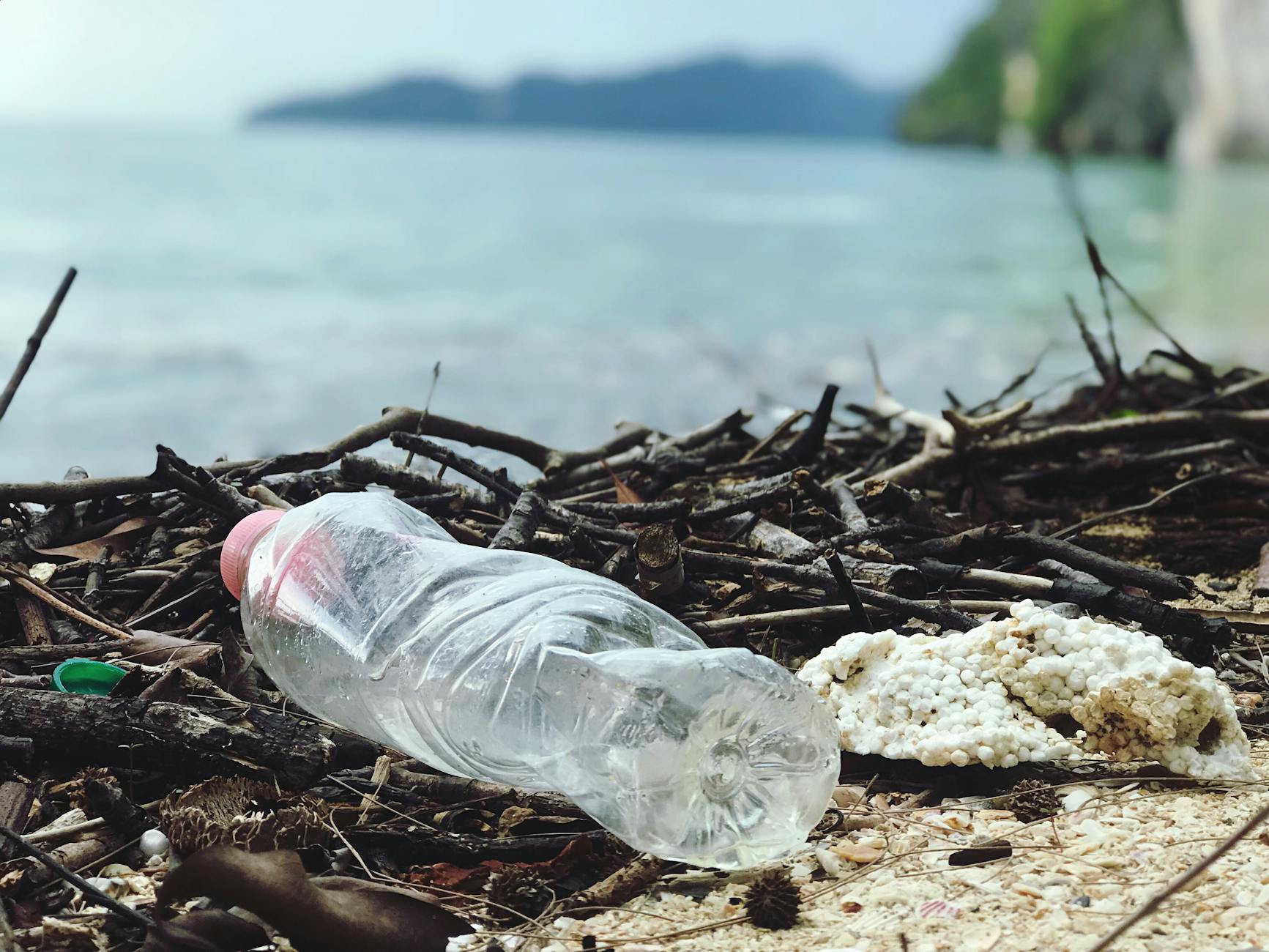
This is the key insight. When a plastic bottle "disappears" from a beach, it has not been consumed and returned to nature - it has shattered into thousands of microplastic fragments that are still chemically plastic, just too small to see. The plastic is still there. This is precisely how the microplastics now found in oceans, soil, air, food, and even human tissue are created.
Estimated Timelines for Common Plastic Items
Because plastic has only existed at scale for a few decades, no one has actually watched a plastic bottle disappear - the timelines below are scientific estimates based on degradation rates, and they vary with conditions like sunlight, temperature, and whether the item is buried or exposed. They are best understood as orders of magnitude rather than precise numbers, but they make the scale vivid:
- Plastic bag: Roughly 10 to 20 years to fragment in the environment, sometimes longer.
- Plastic straw: Around 200 years.
- Disposable coffee cup (plastic-lined): Around 30 years, with the plastic lining persisting far longer.
- Plastic bottle (PET): Commonly estimated at 450 years.
- Disposable nappy: Roughly 500 years, as much of it is plastic.
- Fishing line: Around 600 years.
- Polystyrene foam cup: Often cited as effectively never fully degrading.
- Toothbrush: Effectively permanent on human timescales - which is why every plastic toothbrush ever made still exists.
For perspective, a plastic bottle thrown away today is estimated to still be fragmenting long after everyone alive now has gone. And even at the end of those centuries, the endpoint is not "gone" - it is microplastic.
Why Plastic Lasts So Long
The durability that makes plastic so useful is exactly what makes it so persistent. Plastics are built from long chains of carbon-based molecules (polymers) held together by strong, stable bonds. These bonds are resistant to the enzymes that microorganisms use to break down natural materials, so the usual decomposition process simply cannot get started. Add stabilising additives that manufacturers include to make products last, and you have a material engineered for longevity - performing brilliantly in a product and disastrously in the environment.
Conditions matter enormously. Plastic exposed to strong sunlight on a beach fragments faster than the same item buried in a dark, cold, oxygen-poor landfill, where it can remain almost intact for a very long time. This is why landfilled plastic can persist even longer than the surface-degradation estimates suggest - and why neither outcome actually removes the plastic.
What About Biodegradable and Compostable Plastics?
Materials marketed as biodegradable or compostable are often misunderstood. Some so-called biodegradable plastics simply fragment faster, producing microplastics sooner rather than truly breaking down. Genuinely compostable bioplastics, such as PLA, can break down - but typically only in industrial composting facilities with specific high-temperature conditions, not in a home compost heap or in the ocean. Dropped in the sea or a landfill, many compostable plastics behave much like conventional ones. We explore this nuance fully in our guide on whether bioplastics and compostable plastics are actually better.
The Microplastic Connection
This is where the decomposition question links to everything else we cover. Because plastic fragments rather than disappears, every item ever discarded is slowly becoming microplastic. The bag, the bottle, the straw, the toothbrush - all are feedstock for the particles now detected in the ocean, in soil, in rainfall, and in our bodies. The reason microplastics are accumulating everywhere is precisely that the parent items take centuries to break apart and never truly break down. Plastic's longevity is not a separate issue from microplastics - it is the source of them.
What This Means for How We Use Plastic
The timelines reframe the whole idea of single-use plastic. An item used for five minutes that persists for 450 years has an absurd ratio of usefulness to consequence. It also reframes recycling: since most plastic is not recycled in practice and all of it persists, the only reliable way to keep plastic out of the centuries-long fragmentation cycle is to not create the waste in the first place. That means favouring durable, reusable materials - glass, stainless steel, wood, natural fibres - that can be used for decades and, when they do reach end of life, return to the earth or be genuinely recycled.
The Bottom Line
Plastic does not decompose the way natural materials do - it fragments into smaller and smaller pieces over decades to centuries, but it never truly returns to nature. A plastic bag may take 10 to 20 years to break apart, a bottle around 450 years, and some items effectively never disappear, instead becoming the microplastics now found across the planet and inside our bodies. Biodegradable and compostable labels rarely change this in real-world conditions. The lesson is simple but profound: since plastic is essentially permanent, the only durable solution is to stop creating single-use waste and choose reusable materials that last. For where to begin, see our 10 easiest plastic-free swaps.