The Plastic-Free Bedroom: How to Reduce Microplastic Exposure While You Sleep
This article contains affiliate links. If you buy through these links, ErasePlastic may earn a small commission at no extra cost to you.
The bedroom is where you spend roughly a third of your life - and often in close, sustained contact with materials that shed microplastics continuously. Polyester bedding, foam mattresses, synthetic carpets, and plastic-cased electronics all contribute to the microplastic load in bedroom air and settled dust. Unlike kitchen or bathroom exposure, which happens during active use, bedroom microplastic exposure is largely passive - it occurs while you sleep, for hours at a stretch, in a room that is typically less ventilated than the rest of the home. That combination of high contact time and low ventilation makes the plastic-free bedroom worth thinking about seriously.
The good news is that the most impactful changes in this room are also some of the most straightforward. Bedding is the place to start, and the options are widely available and genuinely effective.
Where Bedroom Microplastics Come From
Synthetic bedding is the most significant single source. Polyester, microfibre, and polyester-cotton blend sheets, duvet covers, and pillowcases all shed fibres during use - not just during washing. Body movement during sleep creates mechanical friction that releases fibres from the fabric surface directly into the air around your sleeping area. Research on synthetic pillowcases has found that they shed tens of thousands of fibres per night under normal sleeping conditions, independent of any washing cycle.
Mattresses and pillows are a secondary but significant source. Most conventional mattresses use a polyurethane foam core, and memory foam pillows are made from the same material. Polyurethane foam degrades over time, releasing microplastic particles that accumulate in household dust. Mattress covers made from synthetic fabrics add further fibre shedding at the surface closest to your body.
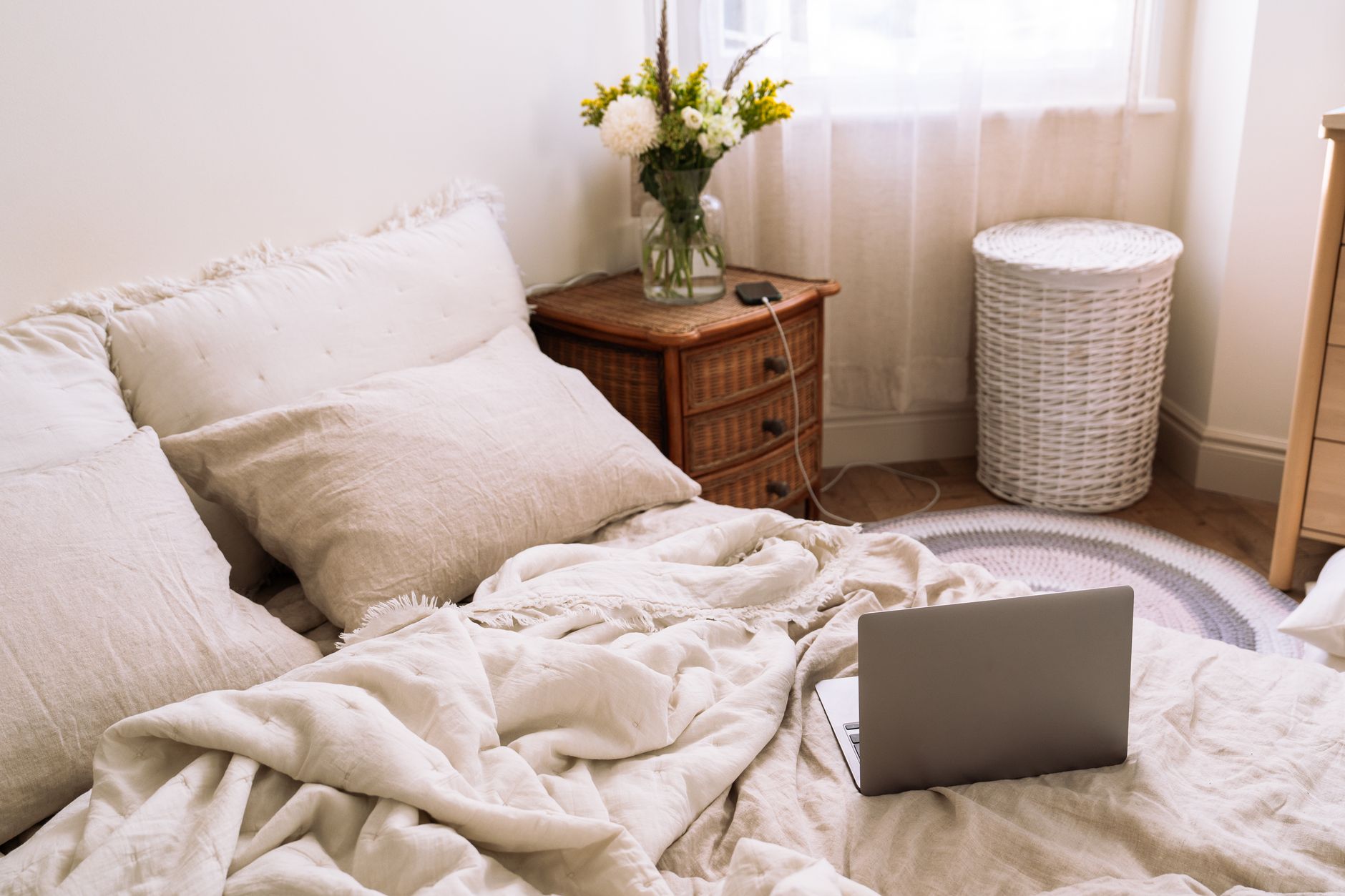
Beyond textiles, synthetic carpets and rugs are a major contributor to bedroom dust. Every footstep mechanically agitates the carpet surface and releases fibres into the air. Electronics on bedside tables - charging phones, tablets, and lamps with plastic components - add a low-level background source through surface degradation and off-gassing, particularly as devices age.
Starting with Bedding
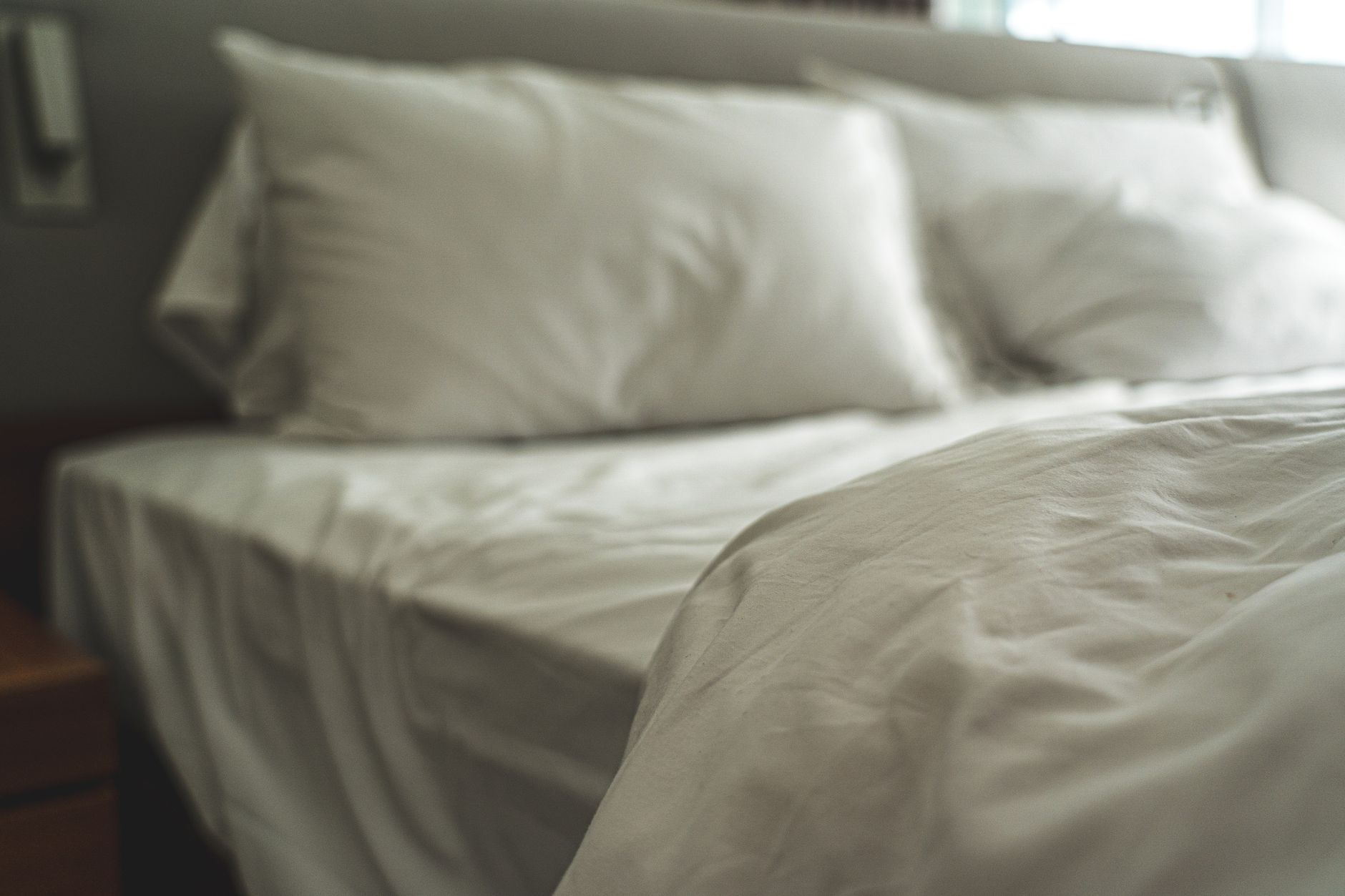
Bedding is the place to begin for two reasons: it is the material you spend the most time in direct physical contact with, and it is practical to replace. Switching from synthetic sheets and pillowcases to 100 percent cotton, linen, or GOTS-certified organic cotton is the single most impactful bedroom swap available for reducing microplastic exposure.
GOTS (Global Organic Textile Standard) certification means the cotton has been grown and processed without synthetic pesticides or chemical finishing agents - relevant not just for microplastic reduction but for reducing chemical exposure from fabric treatments. Standard cotton is a meaningfully better choice than polyester. Organic cotton is better still. Linen is a strong alternative - it is naturally durable, improves with washing rather than degrading the way synthetic fabrics do, and is made from flax, a low-input crop.
Mattresses, Pillows, and What to Replace First
Replacing a mattress is a significant investment and not something most people do in response to a single concern. The practical approach is to address the surfaces your body actually contacts - the pillow and mattress cover - rather than the mattress core itself. These are replaceable at reasonable cost and represent the highest-contact microplastic sources in the mattress setup.
Natural wool pillows are the most widely available alternative to polyester fill or memory foam. Wool is naturally hypoallergenic, temperature-regulating, and does not break down into microplastic particles over time. When a mattress protector or cover needs replacing, choosing one made from 100 percent cotton or wool rather than a synthetic waterproof material significantly reduces direct contact with plastic-derived fibres.
Bedroom Air Quality and HEPA Filtration
Indoor air in bedrooms carries high concentrations of airborne microplastic fibres - partly because bedrooms are typically less ventilated than communal areas, and partly because the textile density is high relative to room size. Studies measuring microplastic concentrations in household dust consistently find bedrooms among the highest-load rooms in the home. Fibres shed from bedding, carpets, and clothing settle on surfaces and become airborne again through movement and air circulation.
Two practical approaches address bedroom air quality. First, ventilation - opening a window during the day, even briefly, flushes airborne particles out of the room before they can settle. Second, a HEPA air purifier running during sleep captures airborne fibres before they are inhaled. HEPA filters are independently rated to capture 99.97 percent of particles above 0.3 micrometres, which covers the majority of airborne microplastic fibres found in indoor environments.
Quick Wins for a Lower-Plastic Bedroom
Not every change requires a significant outlay. Several of the most effective steps cost nothing or very little:
- Vacuum regularly with a HEPA-filter vacuum - capturing settled fibres before they become airborne again is one of the highest-impact habits for bedroom air quality.
- Ventilate daily - opening a window for even 10 minutes in the morning significantly reduces the build-up of airborne particles in a closed bedroom.
- Keep electronics off the bed - charging phones and tablets in another room reduces off-gassing in your sleeping environment and improves sleep quality independently.
- Choose natural-fibre rugs or bare floor - if the bedroom has a synthetic carpet, a natural jute, wool, or cotton rug in the main walking area reduces fibre release underfoot.
- Replace plastic bedside clutter - plastic-cased items on the nightstand degrade slowly over time; replacing them with fewer, natural-material alternatives reduces the ambient plastic load.
The Bottom Line
The plastic-free bedroom is achievable in stages. Start with bedding - it is the highest-contact-area change available and has well-evidenced benefits for reducing microplastic fibre exposure during sleep. Follow with a natural pillow and, when the time comes, a natural-fibre mattress cover. Add a HEPA air purifier if bedroom air quality is a priority. Each step reduces a real source of daily exposure in a room where you spend more concentrated time than almost anywhere else. For a broader look at plastic-free changes across the whole home, see our guide to 10 easiest plastic-free swaps.