
Your Plastic Cutting Board Is Shedding Millions of Microplastics Into Your Food
This article contains affiliate links. If you buy through these links, ErasePlastic may earn a small commission at no extra cost to you.
You carefully choose organic vegetables. You filter your water. But if you're using a plastic cutting board, you may be adding millions of microplastic particles directly to your food every single year. Research into plastic cutting board microplastics has revealed just how significant this everyday kitchen item is as a source of contamination — and the numbers are genuinely surprising. A 2023 study estimated that a polyethylene cutting board sheds between 7.4 and 50 million microplastic particles annually, depending on how heavily it's used.
This article breaks down what the science found, why plastic boards shed so much, which materials are safer, and what to look for when choosing a replacement.
What the Research Found About Plastic Cutting Boards
The headline study on this topic was published in Environmental Science & Technology in 2023 by researchers at the University of North Dakota. They tested polyethylene cutting boards — the white or coloured plastic boards found in most homes — under realistic cutting conditions, simulating a year of normal use. The results showed that a single board releases between 7.4 million and 50.7 million microplastic particles per year into food, depending on cutting intensity and knife type.
What makes this figure particularly important is that these particles end up directly in the food you eat. Unlike microplastics absorbed from water or air, particles scraped from a cutting board land on whatever you're slicing — vegetables, meat, bread — and are ingested with minimal dilution. The researchers also noted that older, more scratched boards shed significantly more particles than newer ones, which means a well-used plastic board in most kitchens is likely at the higher end of that range.
Why Plastic Boards Shed So Much
Plastic cutting boards are made from polymer materials — most commonly polyethylene or polypropylene. Every knife stroke that contacts the board surface creates microscopic cuts and abrasions. Over time, these accumulate into grooves that trap bacteria and, more relevantly to this topic, release tiny polymer fragments each time the board is used. The softer the plastic, the more it sheds — which is why flexible plastic "chopping mats" are even worse than rigid boards.
Washing also plays a role. Repeated dishwasher cycles cause plastic surfaces to degrade faster, creating surface micro-fractures that accelerate shedding. A board that looks clean and intact to the naked eye may have a deeply scored surface at the microscopic level, constantly releasing particles into whatever food touches it. This is one of those cases where the risk is invisible — which is precisely why the research matters.
Which Cutting Board Materials Are Actually Safe?
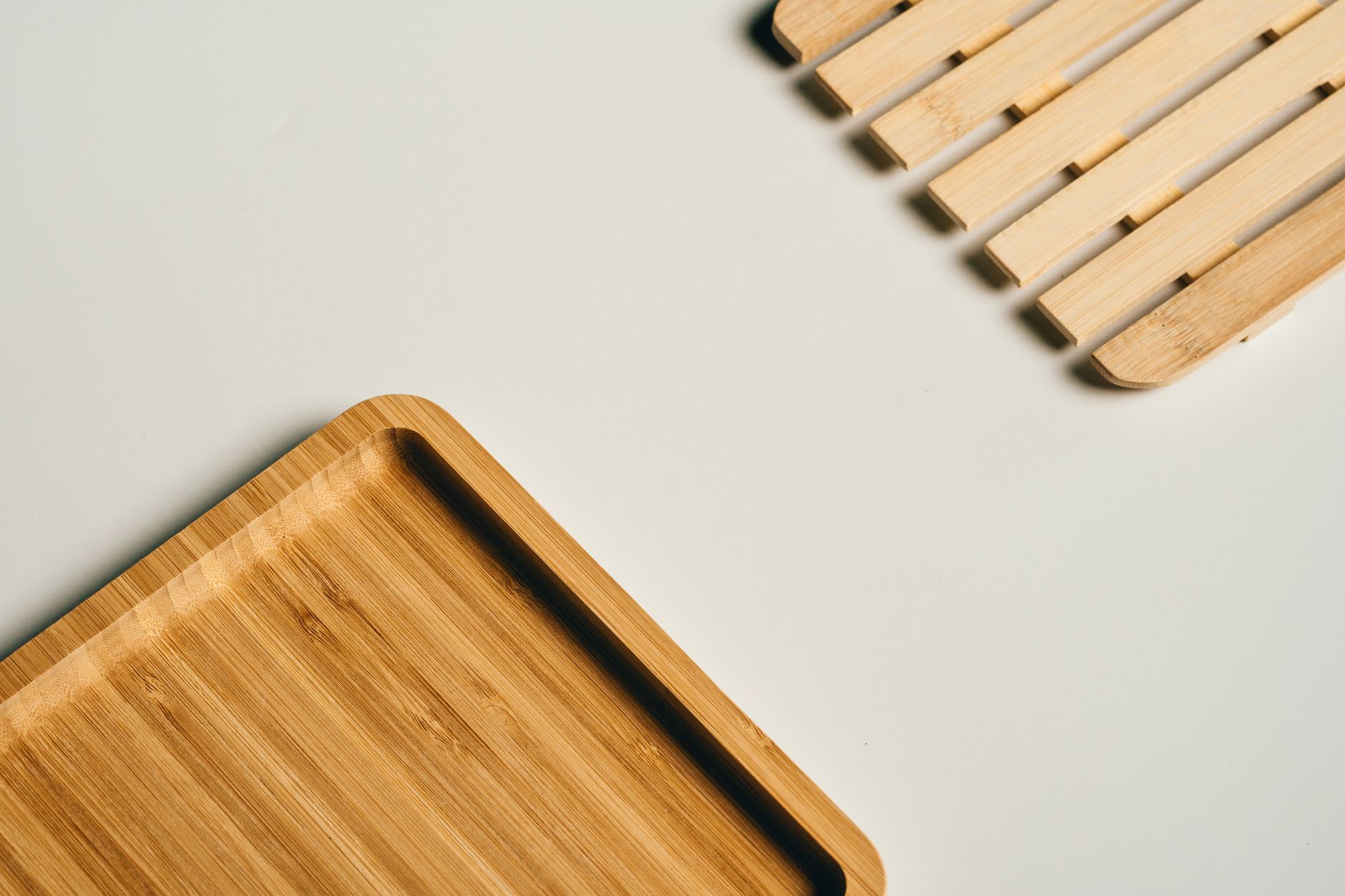
Bamboo and hardwood boards are the two most widely recommended alternatives, and both perform well. Neither material sheds polymer particles when cut — they produce small amounts of cellulose fibre if the surface is heavily scored, but cellulose is a natural organic compound that the body processes normally, not a synthetic plastic. Bamboo has the added advantage of being naturally antimicrobial due to its dense fibre structure, which resists bacterial colonisation even without deep scoring.
Glass cutting boards are technically microplastic-free but are harsh on knives and prone to cracking under heavy use. Stainless steel is another option sometimes used in professional kitchens, though it's less forgiving on knife edges than wood. For most home cooks, a quality bamboo or hardwood board hits the right balance of durability, safety, and knife-friendliness. The key is to choose a thick, solid board rather than a thin laminated one — laminated bamboo boards can use adhesives that introduce their own concerns.
The Best Plastic-Free Cutting Board and Kitchen Swaps
If you're ready to make the switch, the products below cover the most impactful kitchen changes — starting with the cutting board itself and extending to other plastic-free food prep essentials.
The Bottom Line
Your plastic cutting board is one of the most direct sources of microplastic contamination in your kitchen — and it's also one of the easiest to fix. The swap from plastic to bamboo or hardwood is straightforward, affordable, and immediately effective. You don't need to overhaul your entire kitchen at once. Start with the cutting board, since it has direct contact with food on every single surface that enters your body. From there, phasing out plastic utensils and non-stick pans adds further meaningful reductions with each step.
Small changes in the kitchen add up quickly — and this is one of the clearest, most evidence-backed swaps you can make to reduce your microplastic intake right now.