Plastic-Free Cooking: Pots, Pans, and Utensils That Do Not Leach Into Your Food
This article contains affiliate links. If you buy through these links, ErasePlastic may earn a small commission at no extra cost to you.
Cooking is one of the most direct routes for plastic compounds to enter the food you eat. Non-stick cookware coated with PTFE releases particles when overheated or scratched. Plastic cooking utensils - spatulas, spoons, and ladles - shed microplastic particles directly into hot food during stirring and serving. These are not theoretical risks: research has confirmed that plastic utensils used in hot food release measurable quantities of microplastic particles with every use. The alternatives - cast iron, stainless steel, and wood - have been used in kitchens for centuries, do not degrade in the same way, and in most cases outperform plastic-coated cookware in durability even if the initial transition takes some adjustment.
This guide covers where cooking-related plastic exposure actually comes from and which materials replace it most effectively, with specific product recommendations based on published specifications and independent review records. None of these products have been personally tested by ErasePlastic - our assessment is based on materials research and available independent data.
The Problem with Non-Stick Coatings
PTFE - the polymer used in Teflon and most non-stick coatings - is generally stable at normal cooking temperatures. The concern arises in two situations: overheating and physical damage. When a PTFE-coated pan is heated above approximately 260 degrees C (which can happen quickly on a high gas flame or in a preheating oven), the coating begins to break down and release particles and gases. When the coating is scratched by metal utensils or abrasive cleaning, microplastic fragments from the damaged surface enter food directly.
A 2022 study from the University of Newcastle analysed damaged non-stick cookware and found that a single crack in a PTFE coating could release over 9,000 microplastic particles into food. Even without visible damage, regular use gradually degrades the coating surface. The lifespan of a non-stick pan under regular use is typically two to five years before the coating shows visible wear - at which point most of that coating has been going somewhere, and the most likely destination is the food cooked in it.
Beyond particle release, PTFE coatings are part of the broader PFAS chemical family - a group of highly persistent compounds that accumulate in the environment and in biological tissue. The manufacture of PFAS-based coatings releases these compounds into the environment, and their persistence means that even when a pan is discarded, the chemical burden does not simply disappear.
Cast Iron: The Most Durable Plastic-Free Pan
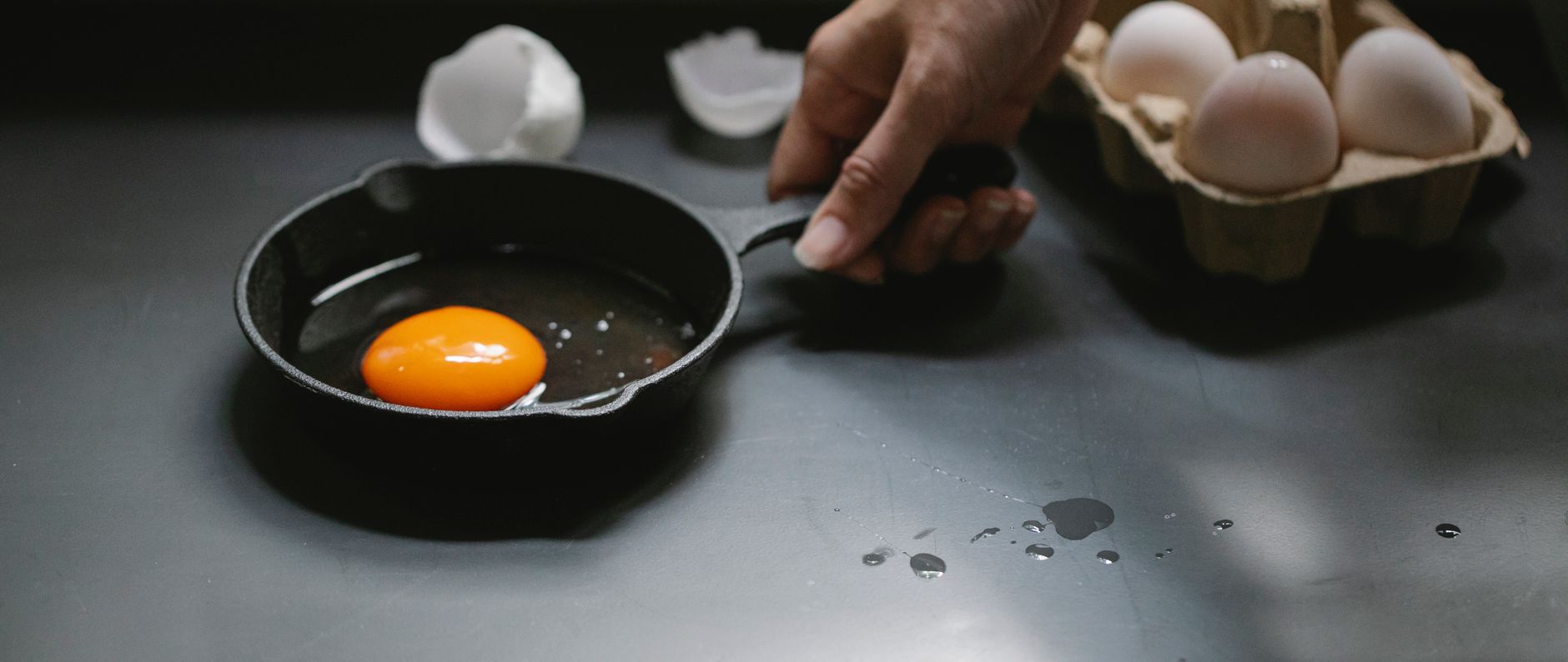
Cast iron is the original non-stick cookware, predating synthetic coatings by centuries. A properly seasoned cast iron pan - built up with layers of polymerised cooking oil through repeated use - provides a naturally non-stick surface that improves with age rather than degrading. It handles high heat without any risk of coating breakdown, goes from hob to oven without issue, and with basic care lasts indefinitely. Many cast iron pans in regular use today are decades old.
The learning curve with cast iron is real but modest: it requires slightly more fat than a PTFE pan, should be dried thoroughly after washing to prevent rust, and is heavier than most alternatives. For high-heat cooking - searing meat, browning vegetables, cooking at temperatures that would damage a non-stick coating - cast iron is functionally superior as well as plastic-free.
Stainless Steel: The Everyday Workhorse
Food-grade stainless steel (18/8 or 304 grade) is chemically inert at cooking temperatures and does not react with acidic foods - a limitation of cast iron, which can impart metallic flavours when used with tomatoes, citrus, or wine-based sauces. Stainless steel is the better choice for the kind of everyday cooking that involves deglazing, simmering sauces, and cooking delicate proteins that would stick to a poorly seasoned cast iron surface.
Stainless steel does require more technique than non-stick: the pan must be properly preheated before adding oil, and the oil must be at temperature before adding food. When used correctly, stainless steel is fully non-stick for most cooking tasks. It is also significantly more durable than non-stick - a quality stainless steel pan does not degrade, cannot be damaged by metal utensils, and improves in performance as the cooking surface develops a natural patina with use.
Cooking Utensils: The Most Underrated Source
Most attention on plastic-free cooking focuses on pans - but plastic cooking utensils are a more direct and often overlooked route for microplastic ingestion. A plastic spatula or spoon used in hot food is in direct contact with the food, at heat, during the cooking process. Research has confirmed that plastic utensils in hot food release microplastics with every use.
A 2023 study found that a plastic spatula used in oil heated to 200 degrees C released over 2 million microplastic particles in a single cooking session. The particle count was significantly higher for worn or scratched utensils, but even new utensils showed measurable release. Given that cooking utensils are used multiple times daily in most households, they represent one of the highest-frequency direct plastic ingestion routes in the kitchen.
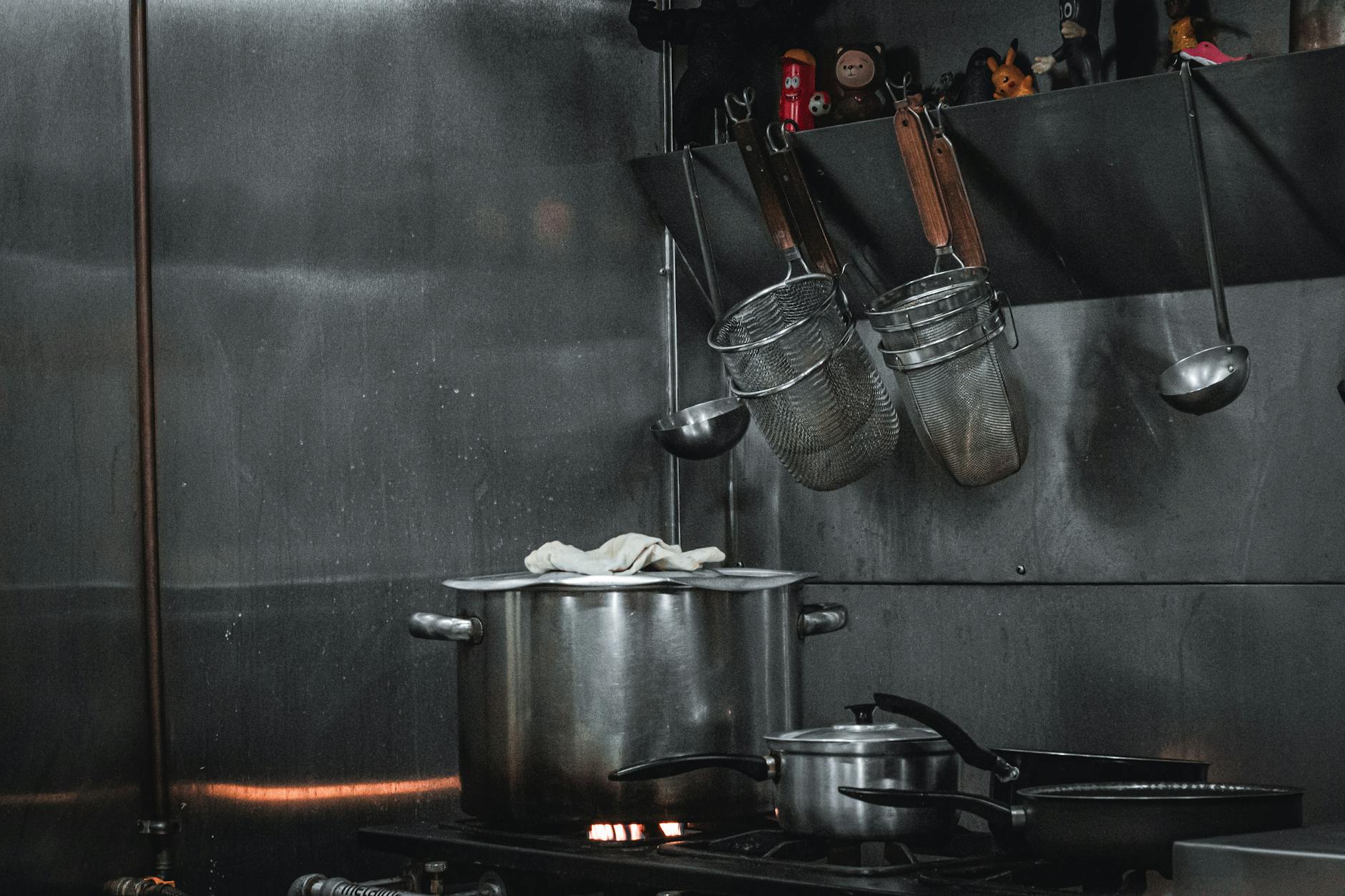
The replacement options are simple and inexpensive. Wooden spoons, spatulas, and cooking tools do not shed microplastics and are naturally heat-resistant. Stainless steel utensils handle high-heat tasks, acidic foods, and heavier stirring where wood might not be appropriate. Both are more durable than plastic equivalents and do not need replacing due to coating wear.
What to Replace First
Replacing all plastic cookware and utensils at once is neither necessary nor practical. The most useful priority order is based on which items contribute the most direct plastic exposure during cooking:
- Plastic utensils in regular use - replace first, because they make direct contact with hot food every time they are used. Cost is low and the swap is immediate.
- Non-stick pans with visible coating damage - scratches, flaking, or discolouration all indicate active coating degradation. A damaged non-stick pan should be replaced promptly, and the replacement should be cast iron or stainless steel.
- Non-stick pans in regular use but without visible damage - these can be phased out as they reach the end of their natural lifespan, replaced with cast iron or stainless steel rather than another non-stick pan.
There is no need to discard functional cookware prematurely. The goal is to stop the cycle of replacing non-stick pans every few years with more non-stick pans. Once cast iron and stainless steel are established in the kitchen, the ongoing replacement cost drops to near zero - these materials do not have a degradation lifespan.
The Bottom Line
Plastic-free cooking reduces one of the most direct routes for microplastics and PFAS chemicals to enter your food. The priority order is clear: replace plastic utensils first (lowest cost, highest contact), then phase out damaged non-stick cookware in favour of cast iron or stainless steel. Both cast iron and stainless steel require a small adjustment in cooking technique but outperform non-stick in durability and eliminate the replacement cycle that non-stick pans require. For a broader look at reducing plastic across the whole kitchen, see our plastic-free kitchen swap guide - and for food storage specifically, the guide to plastic-free food storage covers glass, stainless steel, and beeswax alternatives to plastic containers.